Multidisciplinary Computational Aerosciences

The development of new, complex aerospace vehicles and systems encounters unique design and performance challenges. Understanding and investigation of these challenges require advanced computational techniques from multidisciplinary domains including computational fluid dynamics, computational structural design and analysis, computational aeroacoustics, computational aeroelasticity, etc. Combination of these computational domains are categorized as multidisciplinary computational aerosciences. Our research in computational aerosciences group is inspired by the cutting-edge technologies that power next-generation aerospace systems.

1. Computational Structural Mechanics:

  • Uses numerical modelling and simulation techniques for the structural design and analysis of aerospace vehicles and systems..
  • Focuses on predicting stresses, deformations, vibrations, and the stability of structures to optimize designs and ensure safety and performance.
    Faculty: Dr Riaz Ahmad, Dr. Abdul Munyem Khan.

2. Computational Micro & Nano Systems:

  • Involves advanced computational techniques and models to study, design, and analyse systems and processes at the micro and nanoscale.
  • Such systems often include nano-sensors, micro-actuators, and advanced materials, which are used to enhance structural performance, thermal management, and propulsion systems.

3. Computational Fluid Dynamics:

  • Numerical methods and algorithms are used to simulate and analyse the behaviour of fluids in motion.
  • Simulates the behaviour of fluids, enabling engineers to predict how fluids will interact with surfaces, optimize designs, and study phenomena such as turbulence and heat transfer.
    Faculty: Dr. Muhammad Nafees Mumtaz Qadri, APOP Engr Hamid Mehmood Khan, Dr. Muhammad Irfan Zafar

4. Data-Driven Computational Mechanics:

  • Combines computational mechanics with data science to model and analyse physical systems.
  • Leverages machine learning, statistical inference, and big data techniques to enhance simulations, reduce computational costs, and improve prediction accuracy in mechanical problems.
    Faculty: Dr. Muhammad Irfan Zafar

Our Team

Meet Our Research Team


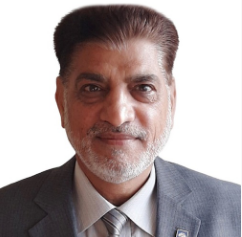
Dr Riaz Ahmad
Group Lead – PhD – Aeronautical Manufacturing


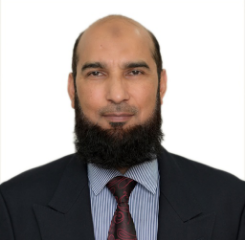
Dr Ibraheem Haneef
PhD – Engineering

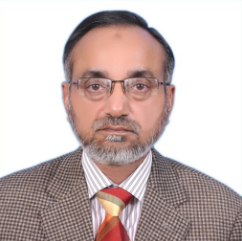
Dr Abdul Munyem Khan
PhD – Aerospace Engineering


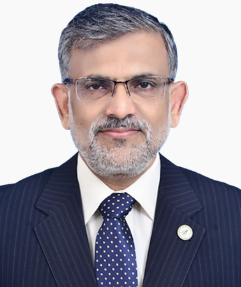
Dr Muhammad Nafees Mumtaz Qadri
PhD – Mechanical Engineering

Dr Muhammad Irfan Zafar
PhD – Fluid Dynamics


APOP Engr Hamid Mehmood Khan

Multidisciplinary Computational Aerosciences

·       Artificial Intelligence Applications for Prediction of Flow Separation Using MEMS Data – Dr Ibraheem Haneef

·       Development of a Multi-Hierarchical Surrogate Based Open Source Framework for Aerodynamic Shape Optimization for Aerospace Applications – Dr Nafees Mumtaz Qadri

·       Machine learning based model for nonlinear systems under parameterized inputs – Dr Irfan Zafar

·       Flow-induced vibration of two co-rotating circular cylinders at low Reynolds Number and high reduced velocities – Dr Nafees Mumtaz Qadri

·       Aeroacoustics and aerodynamic performance optimization of propeller blades – Dr Irfan Zafar

·       Physics Inspired ML Based Simulators for Car Cabins Air Conditioning and Heating Systems – Dr Ibraheem Haneef

·       Deep learning applications for the cancer diagnosis & classification – Dr Irfan Zafar

·       Enhancing fake image detection using GANs-CNN model – Dr Irfan Zafar